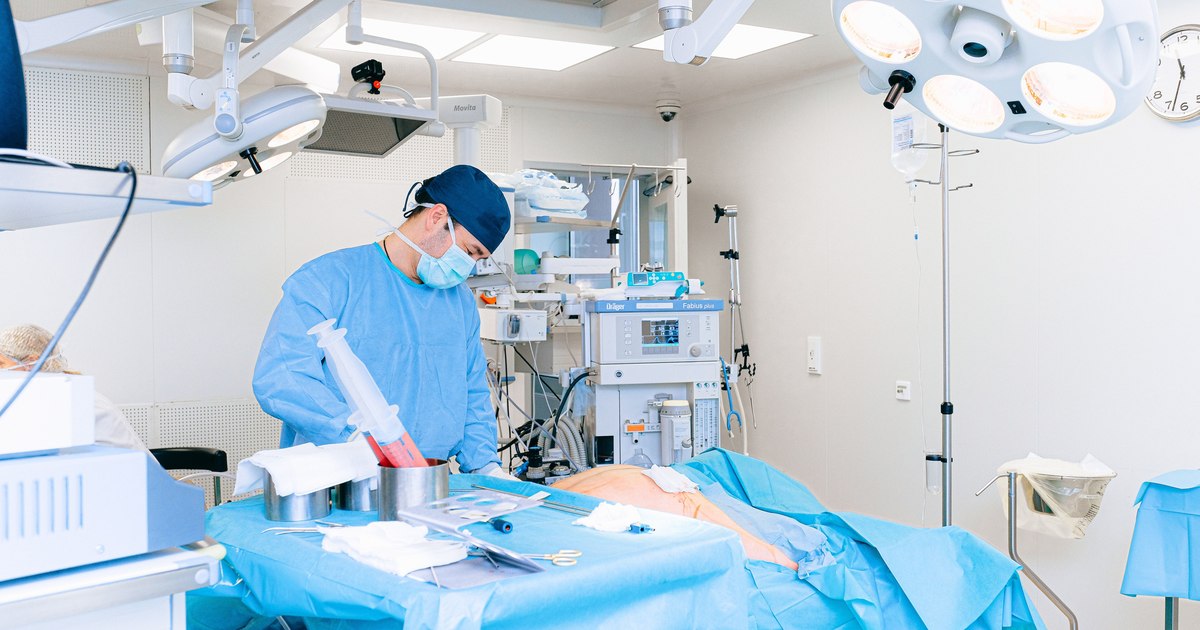
Egg retrieval is the one day of the IVF journey that happens in an operating room — and it's briefer and gentler than most couples imagine. You arrive fasting, the procedure takes 15–30 minutes under short sedation, and you're typically home the same morning.
The procedure itself
Timed 34–36 hours after the trigger injection, the retrieval is done through the vagina — no cuts, no stitches. Guided by ultrasound, a fine needle gently drains the fluid from each follicle; only the tip of the needle enters the ovary. In the next room, an embryologist examines that fluid and finds the eggs. You're sedated throughout and feel nothing during the procedure — for most patients, the anticipation turns out to be far scarier than the retrieval itself.
His part of the day
While the retrieval happens, the male partner provides a semen sample (or a previously frozen sample is thawed). The lab washes and prepares it, selecting the healthiest sperm for fertilization later that day.
Recovery
Expect grogginess from sedation for a few hours, and mild cramping or bloating for a day or two — a normal response from ovaries that have just been drained of many follicles. Most women rest that day and return to routine the next. Worsening pain, fever, heavy bleeding, or breathlessness are not part of normal recovery and mean you should call the clinic.
What the lab does that evening
The mature eggs are fertilized the same day — either by conventional IVF (eggs and prepared sperm placed together) or by ICSI (a single sperm injected into each egg, used mainly for male-factor cases). The next morning, the lab knows how many eggs fertilized normally — the first of several daily updates as the embryos grow.
Frequently asked
How many eggs will be retrieved?
It varies with age and ovarian reserve — the follicle count on your monitoring scans gives the best estimate for your own cycle. Not every follicle yields an egg, and not every egg is mature; that drop-off is expected, not a failure.
Is retrieval painful afterward?
Most women describe it as period-like cramping managed with simple pain relief. Severe pain is the exception and should be reported.
When do we know how the embryos are doing?
Fertilization results come the day after retrieval, and the lab tracks development daily until transfer or freezing around day 5.