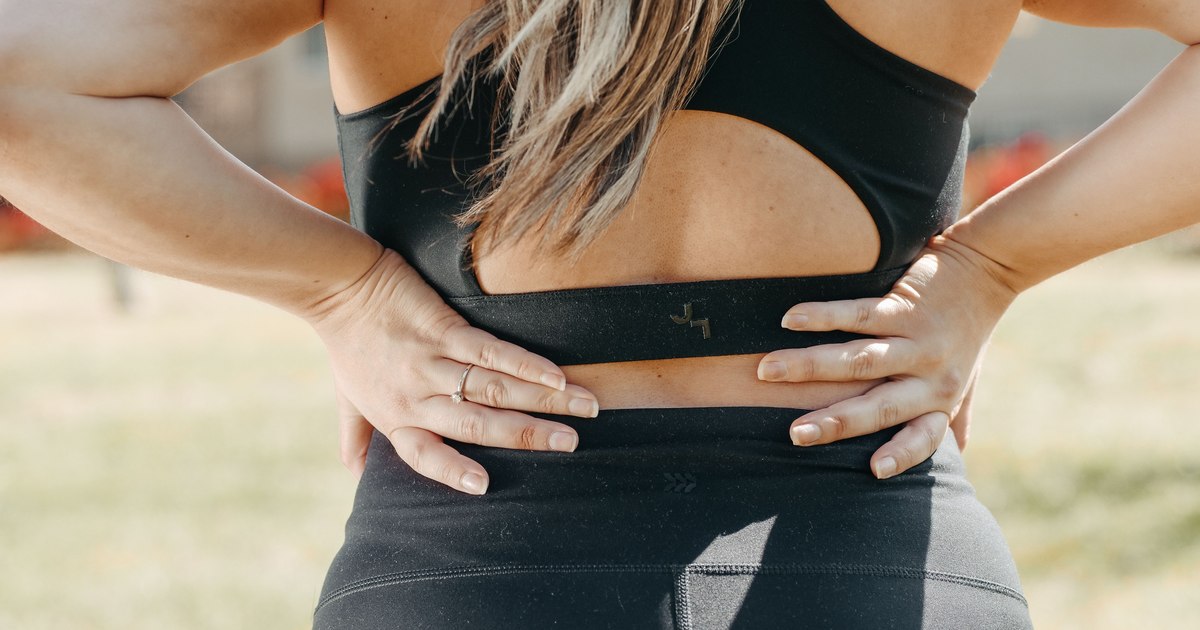
Back pain that persists years after a C-section can genuinely be connected to it — but not usually through the incision itself. The more common links are pelvic floor and core weakness from the surgery and pregnancy, posture changes from years of carrying and feeding a child, and, less often, scar tissue restricting normal movement. A doctor needs to rule out unrelated causes too, since ordinary degenerative back pain doesn't skip people who've had a cesarean.
How could a C-section cause back pain years later?
- Core and pelvic floor weakness. A cesarean bypasses vaginal delivery but not the abdominal wall changes of pregnancy — the deep core muscles that normally stabilise the spine are stretched and cut through during surgery, and full strength doesn't always return without deliberate rehab.
- Posture from years of carrying, feeding, and lifting. Repeated forward-leaning postures — nursing, carrying a growing child on one hip, lifting a car seat — load the lower back differently than before pregnancy, and the effect compounds over years, not days.
- Internal scar tissue (adhesions). The incision heals in layers, and in some women the scar tissue can restrict how freely the abdominal wall and surrounding tissue move, indirectly affecting how the lower back is supported.
- Epidural or spinal injection site. Site-related pain from the anesthesia itself is uncommon as a cause of pain that's persisted for years — worth mentioning to a doctor, but rarely the main explanation this far out.
When is it probably NOT related to the C-section?
Back pain years out is also, very often, simply back pain — the same kind anyone can develop from posture, prolonged sitting, weight changes, disc issues, or general wear over time. A history of cesarean doesn't rule these out, and it's worth not assuming a surgical cause by default.
A C-section can plausibly contribute to years-later back pain through core weakness and posture, not usually through the scar itself.
What actually helps
- A proper pelvic floor and core assessment, not just general exercise — a physiotherapist trained in postpartum or pelvic health can identify specific weakness patterns that generic back stretches miss.
- Posture correction for daily carrying and feeding habits, since these are often the ongoing driver rather than anything from the original surgery.
- Getting the scar itself checked if the pain is localized near the incision or worsens with certain movements — this points a doctor toward adhesion-related causes specifically.
- Ruling out disc or spine-specific causes through a standard evaluation if the pain has features like radiating leg pain, numbness, or worsening at rest — these point away from a pregnancy-related cause.
Frequently asked
Can a C-section scar cause pain years later even if it healed normally?
It's possible, though less common than muscular or postural causes. If pain is localized right at or near the scar and changes with movement or pressure, mention this specifically to your doctor — it points toward checking the scar tissue itself rather than the back generally.
Is this something a gynaecologist treats, or should I see someone else?
Back pain itself is usually best assessed by a physiotherapist or orthopedic specialist. Your gynaecologist or obstetrician is the right person to weigh in if you suspect a connection to the C-section specifically, and can help direct you to the right specialist from there.
Does the number of years since the C-section matter?
Not in a fixed way — there's no cutoff after which a connection becomes impossible. What matters more is whether the pain pattern (location, what triggers it, what eases it) points toward a postural/core cause or a scar-related one, which a proper evaluation can help sort out.
Will core strengthening alone fix it?
For many women whose pain traces back to core and pelvic floor weakness, targeted strengthening genuinely helps — but it needs to be assessed and guided rather than assumed, since starting the wrong exercises for the wrong cause can do little or even aggravate things.