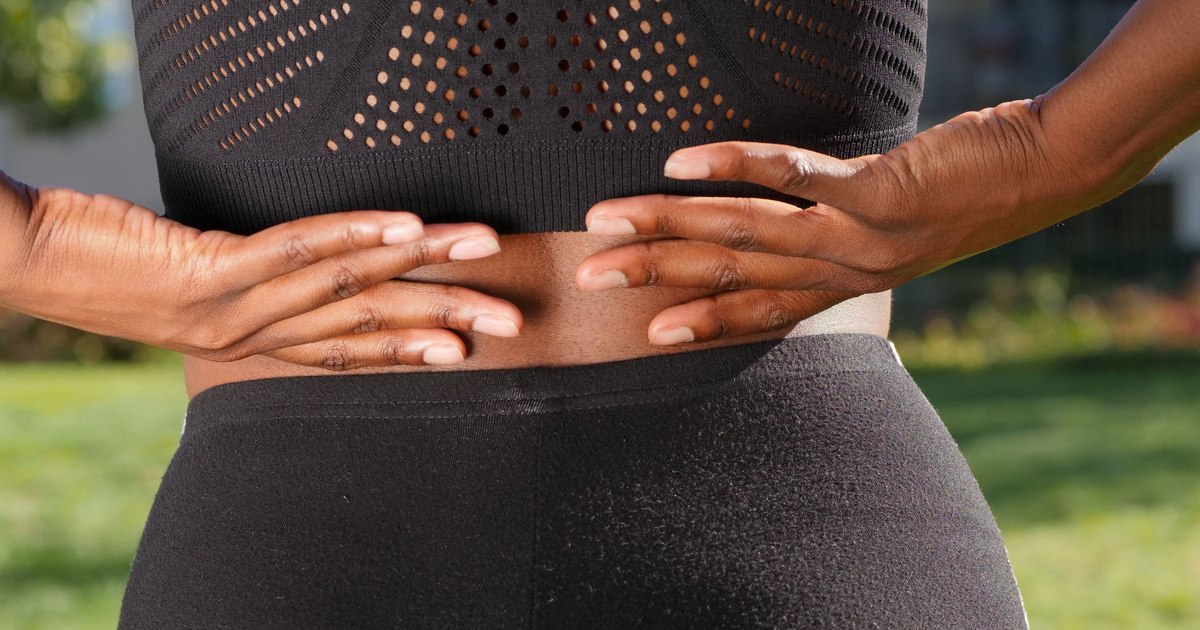
Back pain that's worst lying down and better upright, months after a C-section, is a pattern worth paying attention to — it's a different picture from the general postpartum back pain most new mothers get, and it points more toward posture, core weakness, and how you're feeding or carrying your baby than toward the surgery itself. It usually responds well to simple, targeted changes, but a pain pattern that's specifically positional is also worth mentioning to your doctor rather than assuming it will fade on its own.
Why "worse lying down, better upright" is a specific clue
Most causes of ordinary postpartum back pain — general fatigue, loosened pregnancy ligaments, carrying a growing baby — tend to ache through the day and ease with rest. A pattern that runs the other way, flaring specifically when you lie down and settling once you're up and moving, more often points to:
- Core and pelvic floor muscles that haven't yet rebuilt their support role, so your spine loses some of its usual stabilisation the moment you're not upright and bracing against gravity
- Feeding posture — hours a day hunched over a baby, especially with twins, loads the lower back in a position that only fully releases once you change posture
- How you're positioned in bed — a mattress or sleeping position that doesn't support the lower back's natural curve can flare pain specifically in lying-down positions
- Referred muscle tightness from carrying, lifting, and the general physical demands of early motherhood, which often shows up more once the body is still
What tends to help
- Supportive sleep positioning — a pillow between the knees if you sleep on your side, or a small pillow under the knees if you sleep on your back, to keep the lower spine in a neutral position
- Feeding posture changes — a feeding pillow or extra back support to avoid hunching forward for long stretches, especially important with twins where feeding sessions can be longer or more frequent
- Gentle core and pelvic floor rehabilitation, once your doctor has confirmed you're ready for it — this is the single biggest lever for postpartum back pain generally, cesarean or not
- Gradual, not sudden, return to activity — the core muscles that support your spine take real time to rebuild strength after both pregnancy and surgery
When to get it checked rather than wait it out
See your doctor if the pain is severe, is getting worse rather than better over weeks, comes with numbness or tingling down a leg, or doesn't improve at all with posture and feeding adjustments. Four months out is still well within a normal recovery window, but a pain pattern that's this specific deserves a direct look rather than assuming it will resolve by itself — particularly if you had a C-section delivering twins, since the physical demands of early motherhood are doubled.
A pain that's worse lying down and better upright is a useful clue, not a diagnosis on its own — it's the detail worth describing clearly to your doctor, because it usually points toward posture and core strength rather than the surgery itself.
Frequently asked
Could this still be related to my C-section even months later?
It's possible but less likely to be the direct cause of a lying-down-specific pattern. The incision itself is usually well healed by four months; what's more commonly still "unfinished" at that stage is the deep core and pelvic floor strength the surgery and pregnancy both affected, which is a slower rebuild. For a broader look at C-section-linked back pain that shows up much further out, see chronic back pain years after a C-section.
Is this more common with twins?
The pattern itself isn't exclusive to a twin pregnancy, but the contributing load often is — more feeding time, more carrying, and a body that worked harder through pregnancy and delivery all raise the chance of this kind of posture-driven pain showing up.
Should I avoid lying down if it hurts?
No — avoiding lying down isn't the fix, and rest is still important in early postpartum recovery. The better approach is adjusting how you're positioned when you do lie down (pillow support, a neutral spine) and working on the underlying core and posture issues, rather than avoiding rest altogether.
When should I ask for a physiotherapy referral?
If simple posture and sleep adjustments over a couple of weeks don't meaningfully help, ask your doctor about a postpartum physiotherapy referral. Targeted pelvic floor and core rehabilitation is specifically designed for exactly this kind of pain and is widely used after both vaginal delivery and C-section.