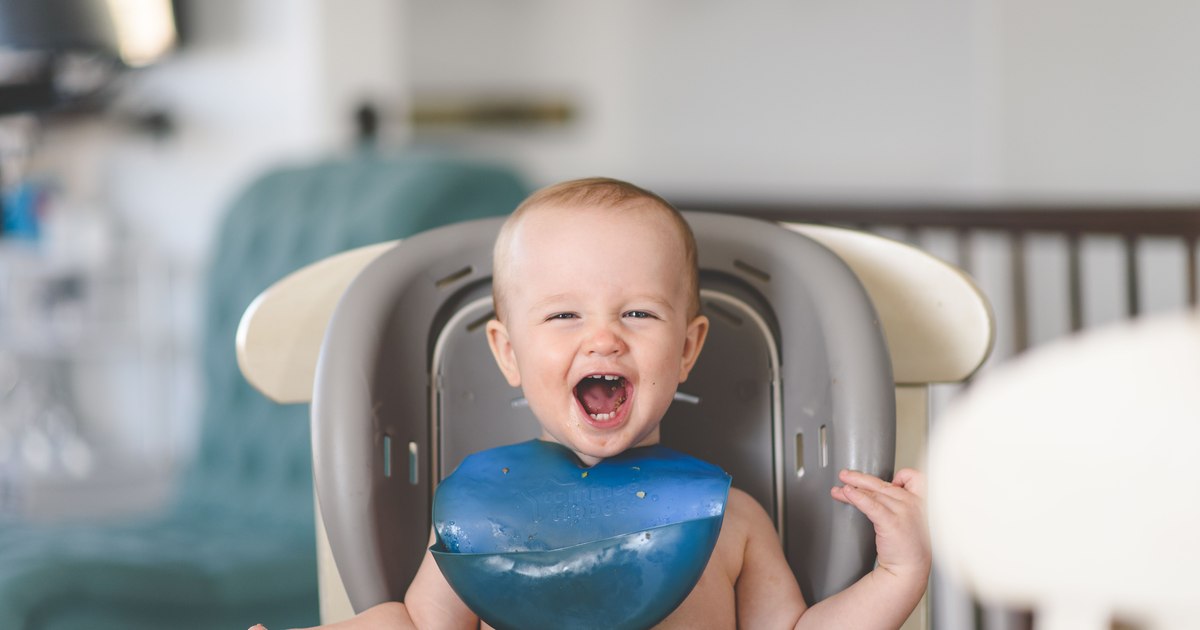
Most babies are ready to start solid food around 6 months of age — not noticeably earlier — and the clearest confirmation isn't the date on the calendar but a specific set of physical and behavioural signs your baby shows. Breast milk or formula continues to be the main source of nutrition for several more months; solids at this stage are about introduction and practice, not replacement.
Why around 6 months, and not earlier
- Your baby's iron stores, built up before birth, naturally start to run down around this age — solid foods, particularly iron-rich ones, become an important additional source
- Digestive and immune maturity around 6 months make it a safer window to introduce new foods than in the earlier months
- Starting much earlier than 6 months isn't recommended without your paediatrician's specific guidance, even if your baby seems big or hungry
The actual readiness signs to look for
- Good head and neck control — your baby can hold their head steady and sit upright with minimal support, usually in a high chair or on a lap
- Loss of the tongue-thrust reflex — young babies automatically push anything placed on the tongue back out; once this reflex fades, food has a chance of actually being swallowed rather than spat out
- Interest in food — watching you eat, reaching for food, or opening their mouth when a spoon approaches
- Ability to move food to the back of the mouth — the first few attempts are messy by nature, but your baby should show some ability to work food backward rather than only pushing it straight back out every time
If most of these aren't yet present, it's reasonable to wait a little longer and try again in a couple of weeks, even if you've already crossed 6 months.
How to actually start
- Begin with a single, iron-rich, smooth, mashed or pureed food, offered once a day, and watch how your baby manages it over several days before introducing a second food
- Continue breastfeeding or formula feeds as usual alongside solids — this doesn't reduce milk feeds at this stage
- Introduce one new food at a time, a few days apart, so that if a reaction occurs, you know which food caused it
- Many Indian families start with options like ragi porridge, mashed dal water progressing to mashed dal, mashed banana, or mashed boiled vegetables — your paediatrician can guide specific first-food choices based on your baby's needs
What to avoid in the first year
- Honey — not safe before 12 months, due to the risk of infant botulism
- Added salt and added sugar — not needed, and not recommended, in foods for babies under one year
- Cow's milk as a main drink — breast milk or formula should remain the primary drink through the first year; cow's milk can be introduced in small amounts in cooking from around 6 months, but shouldn't replace breast milk or formula as the main drink until after the first birthday
- Choking hazards — whole nuts, whole grapes, hard raw vegetables, and similarly sized firm foods, which should wait until your baby is older and chewing more effectively
Readiness is something your baby demonstrates, not something a date on the calendar decides — two babies can both be exactly 6 months old and be at genuinely different points in getting there.
Frequently asked
My baby is 6 months old but shows none of the readiness signs yet — should I force it?
No. It's reasonable to wait another week or two and reassess, rather than starting on the calendar date alone. If your baby still isn't showing any readiness signs well past 6 months, mention it at your next paediatrician visit.
Does starting solids mean I should cut down on breastfeeding or formula?
Not at this stage. In the early months of starting solids, milk feeds remain the main source of nutrition, and solids are offered alongside them, not as a replacement.
What if my baby gags while trying a new food?
Gagging is a normal, protective reflex as babies learn to manage new textures, and it's different from choking — a gagging baby is making noise and will usually clear it themselves. True choking is silent or accompanied by real distress and needs immediate help. If you're ever unsure which one you're seeing, treat it as an emergency and act accordingly.
Can I start with store-bought baby food instead of homemade purees?
Either approach can work. If you use store-bought options, check that they're age-appropriate and have no added salt or sugar — the readiness signs and introduction pace matter more than whether the food is homemade or packaged.