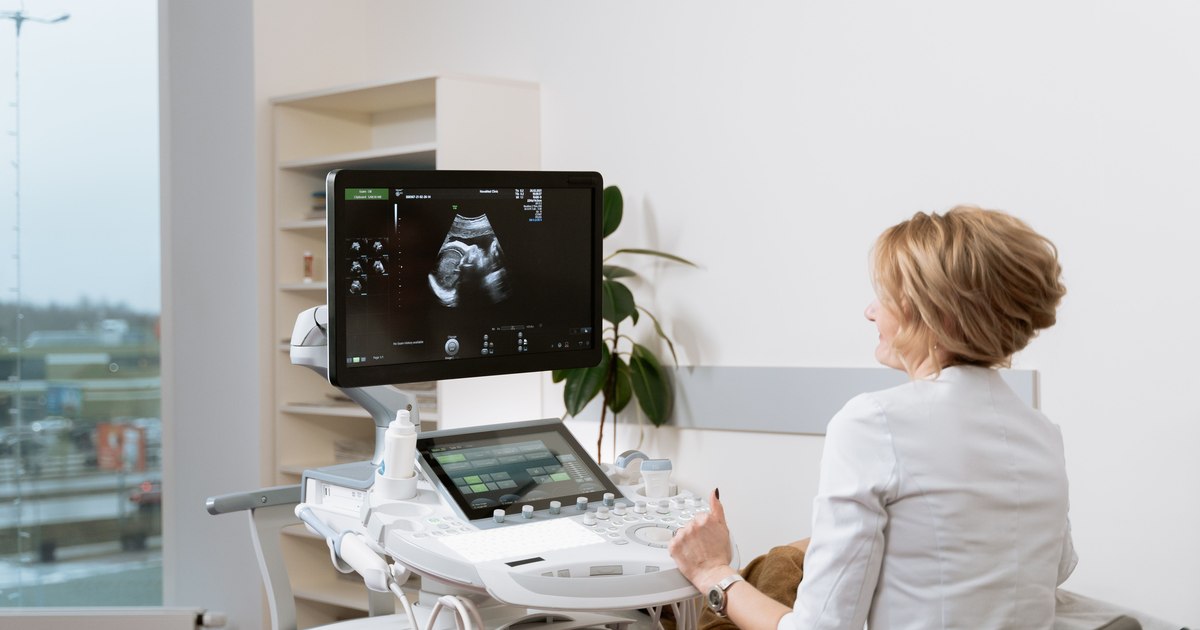
In a normal pregnancy, usually four to five scans are needed — each at a specific window, each answering a different question. High-risk or twin pregnancies need more. Here's what each scan is for, so no appointment feels like a mystery.
The scans of a normal pregnancy
| Scan | When | What it checks |
|---|---|---|
| Dating scan | ~6–9 weeks | Confirms the pregnancy, its location, heartbeat, and due date |
| NT/NB scan | 11–13 weeks | Screens for chromosomal abnormalities (neck fold and nasal bone) |
| Anomaly / TIFFA scan | 18–22 weeks | Detailed check of all the baby's organs and structures |
| Growth scan | 28–32 weeks | Baby's growth, position, amniotic fluid, and placenta |
| Late growth/Doppler scan | As advised near term | Growth and blood-flow check where indicated |
The dating scan confirms the foundations
The first scan establishes that the pregnancy is inside the uterus, whether there's one baby or two, and the accurate due date — which every later decision quietly depends on.
The NT/NB scan is a screening test
Done in a narrow 11–13 week window, it measures the fluid at the back of the baby's neck and checks the nasal bone, screening for chromosomal abnormalities. It estimates risk — it doesn't diagnose — and is usually paired with a blood test (the double marker) for a sharper estimate.
The anomaly scan is the big one
Between 18 and 22 weeks, the TIFFA scan examines the baby's organs system by system — brain, heart, spine, kidneys, limbs. It's the most detailed look at the baby's structure in the entire pregnancy, which is why it takes longer than other scans.
Growth scans watch the final stretch
From 28–32 weeks, scans shift to tracking growth, the baby's position, the placenta, and the amniotic fluid around the baby. In high-risk pregnancies — or twins — these repeat more often, sometimes with Doppler studies of blood flow.
Scans are safe
Ultrasound doesn't harm the baby — it's sound waves, not radiation. These scans exist for the safety of both baby and mother, so if your doctor advises an extra one, there's a reason; skipping scheduled scans is the risk, not attending them.
Frequently asked
Are extra scans harmful to the baby?
No. Ultrasound has no known harmful effects on the baby — it's used precisely because it's safe to repeat.
What if I miss the NT scan window?
The 11–13 week window is genuinely narrow; if missed, alternative blood-based screening (like the quadruple marker or NIPT) can still assess chromosomal risk — ask your doctor promptly.
Why does a twin pregnancy need more scans?
Twins carry higher risks of growth differences and earlier delivery, so their growth is tracked more frequently through the third trimester.