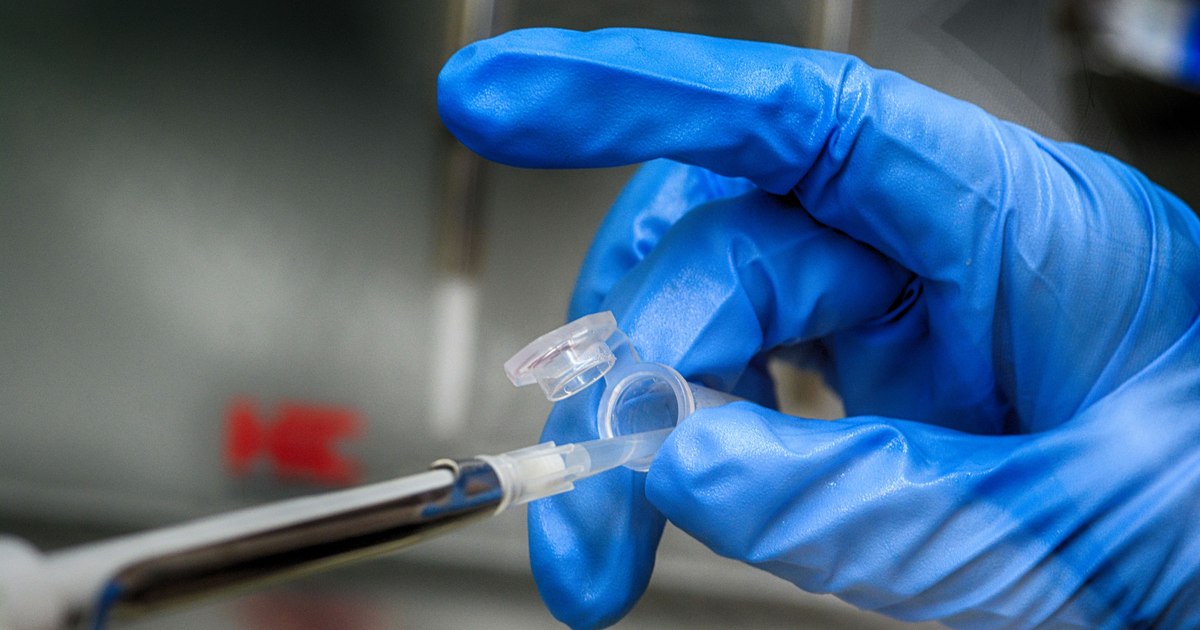
Once egg retrieval is done, your eggs disappear from view into the embryology lab — and that's usually where patients' mental picture of IVF goes blank. It isn't a black box. It's a sequence of precise, closely controlled steps: identifying healthy eggs, selecting the healthiest sperm, and — in ICSI — placing one sperm directly inside one egg to give fertilization its best chance.
Step 1: Collecting healthy eggs
Egg retrieval itself is a planned procedure, not a guessing game — the fluid from each follicle is examined immediately so the embryology team knows which eggs were actually collected and which of those look mature enough to attempt fertilization. Not every follicle yields a usable egg, which is one reason the number of eggs retrieved and the number ultimately fertilized are reported as two different numbers.
Step 2: Inside the embryology lab
From this point on, every cell is handled under a microscope, inside carefully controlled temperature, humidity and air-quality conditions designed to mimic the inside of the body as closely as possible. This is the part of IVF that runs on protocol and precision rather than chance — timings are tracked to the hour, and each embryo is logged and monitored individually so nothing is handled on guesswork.
Step 3: Selecting the healthiest sperm
Before fertilization, the sperm sample itself goes through a selection process aimed at identifying the sperm most likely to fertilize an egg successfully — looking at motility (how well they move) and morphology (their shape), among other markers. This step matters for both conventional IVF and ICSI, but it's central to ICSI, since only one sperm is chosen per egg.
Step 4: ICSI — one sperm, one egg
ICSI (intracytoplasmic sperm injection) is a variation on standard IVF fertilization. Instead of placing eggs and sperm together in a dish and letting fertilization happen on its own, the embryologist uses a fine needle to gently introduce a single selected sperm directly into a single egg, under magnification. It's typically used when sperm count, movement or shape may make natural fertilization in a dish less likely, when a previous IVF cycle had unexpectedly low or no fertilization, or when using surgically retrieved sperm.
Why this stage is described as "precision, not chance"
It's natural to think of IVF success as a matter of luck — whether an egg happens to fertilize, whether an embryo happens to develop well. The embryology lab is built to reduce how much of that is left to chance: standardized protocols, continuous monitoring, and individual tracking of every egg and embryo are what let a clinic tell you, cycle by cycle, what actually happened at each step rather than just the final outcome. Hope still matters — not every retrieved egg fertilizes, and not every fertilized egg becomes a transferable embryo — but the lab process itself is designed around control wherever control is possible.
IVF and ICSI aren't about chance — they're about precision, expertise, and hope working together.
Frequently asked
Is ICSI used in every IVF cycle?
No. Conventional IVF — placing eggs and sperm together and letting fertilization happen naturally in the dish — is still used when semen parameters are normal. ICSI is recommended specifically when sperm factors, a prior low-fertilization cycle, or surgically retrieved sperm make direct injection the more reliable option. Your fertility team will tell you which approach applies to your cycle.
Does ICSI improve the baby's health or genetic risk?
ICSI addresses fertilization — getting a sperm into an egg — not the genetic quality of either. It doesn't change the embryo's chromosomal makeup. Research hasn't shown it to carry meaningfully different health outcomes for children compared with conventional IVF when it's used for its intended sperm-related indications.
Why do some retrieved eggs not fertilize at all?
Not every collected egg is mature enough to fertilize, and even among mature eggs, fertilization isn't guaranteed with either method — this is part of why the eggs-retrieved, eggs-fertilized and embryos-on-day-5 numbers are usually all reported separately rather than assumed to be the same.
What happens after fertilization is confirmed?
The fertilized eggs are cultured and monitored daily as they divide — this is the stage covered in fertilization, embryo culture, and the transfer, and the appearance-based scoring used to pick which embryo to transfer first is explained in embryo grading, explained.
Egg retrieval day covers what happens just before this stage, from your side of the procedure.