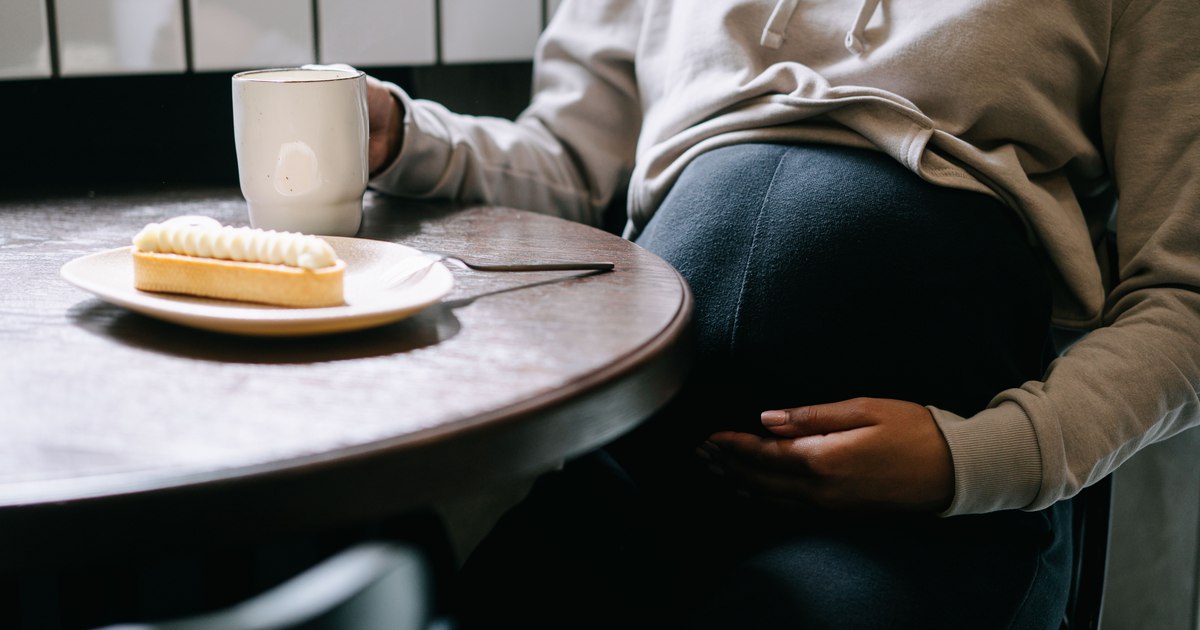
Up to about 200 mg of caffeine a day is the widely accepted safe ceiling during pregnancy — roughly one to two cups of coffee, depending on how strong it is. That total isn't just your morning coffee: chai, chocolate, cola, some green teas and even a few over-the-counter medicines all count toward it. Staying under the ceiling matters more than eliminating caffeine altogether.
Where the 200 mg number comes from
The 200 mg-a-day upper limit is what most major obstetric bodies converge on for pregnancy, and it's the figure Dr. Gahlot uses in clinic. It's not zero — it's a threshold that reflects the current evidence on caffeine crossing the placenta while acknowledging that small amounts have not been shown to cause harm.
A few things worth knowing about how caffeine behaves in pregnancy:
- It crosses the placenta. The baby has none of the enzymes needed to break it down, so caffeine lingers in the baby's system longer than in yours.
- Your body clears it more slowly too. From the second trimester onward, one cup of coffee takes noticeably longer to leave your bloodstream than it did before pregnancy.
- Higher intakes have been linked in studies to lower birth weight and, at very high levels, to a slightly higher risk of miscarriage. The 200 mg limit is set well below where those signals appear, with a margin.
The point isn't to induce guilt over a cup of coffee. It's to give you a total daily number you can plan around.
What actually counts toward 200 mg
Most patients think "coffee" and stop there. The everyday reality is that caffeine is scattered across several foods and drinks — and some medicines — you may not associate with it. Rough figures for the amount of caffeine per serving:
| Item | Typical caffeine per serving |
|---|---|
| Filter or brewed coffee (about 240 ml / 1 mug) | 95–165 mg |
| Instant coffee (1 teaspoon) | 60–80 mg |
| Espresso (single shot, 30 ml) | 60–75 mg |
| Strong Indian chai (1 cup) | 40–70 mg |
| Green tea (1 cup) | 25–45 mg |
| Cola (330 ml can) | 30–45 mg |
| Dark chocolate (30 g bar) | 15–25 mg |
| Milk chocolate (30 g) | 5–10 mg |
| Decaf coffee (1 cup) | 2–15 mg |
| Some over-the-counter painkillers and cold-and-flu tablets (per tablet) | 30–130 mg |
These are ranges, not exact values — strength, brewing time, brand and cup size all shift the number. Treat the higher end of each range as more realistic than the lower.
A practical way to run the numbers: two cups of filter coffee alone can already reach the 200 mg ceiling, leaving little room for chai or chocolate in the same day. Two cups of chai plus a small bar of dark chocolate stays comfortably under.
The medicines patients often miss
Caffeine turns up in some over-the-counter medications more often than most people realise — particularly certain combination painkillers (with paracetamol or aspirin) and some cold-and-flu tablets. A single tablet can carry as much caffeine as a cup of coffee.
Read the label on any over-the-counter medicine before taking it in pregnancy, and if caffeine is in the ingredient list, factor it into your daily count. Better still, ask your obstetrician or pharmacist for a caffeine-free alternative — most have one.
Decaf, herbal teas and other common questions
Decaf isn't zero-caffeine — a cup usually has around 2 to 15 mg, so several cups in a day still add a small amount. That's fine and stays well under the limit.
Herbal infusions — chamomile, peppermint, ginger — contain no caffeine. That doesn't automatically make them all pregnancy-safe (some herbs have other effects), but the caffeine question doesn't apply to them.
Green tea does contain caffeine, though less than coffee. Two to three cups a day sits inside the 200 mg ceiling.
Energy drinks are a different category — they combine caffeine with other stimulants (taurine, guarana, sometimes very high sugar) and are worth avoiding in pregnancy entirely, not just for the caffeine.
How to stay under 200 mg without becoming anxious about it
The daily ceiling is meant to be usable, not measured to the milligram. A pragmatic pattern that works for most patients:
- Pick one caffeinated drink you actually enjoy each day — the morning coffee, or the 4 p.m. chai — and let that be the main one.
- Keep the second drink small, or make it decaf, or switch it out for a herbal tea.
- Assume the higher end of the caffeine ranges above (a "cup" at home is often larger than a standard 240 ml serving).
- Read medicine labels; skip cola and energy drinks; treat chocolate as a small extra rather than a category to track daily.
- When in doubt, drink water. Hydration matters more in pregnancy than caffeine does.
The goal isn't zero caffeine. It's a manageable daily total you don't have to think about after the first week of getting used to it.
When to talk to your doctor
You don't need a special consult about caffeine. But mention your intake if:
- You typically drink more than 3 cups of coffee or 4 cups of strong chai a day
- You've been using caffeine-containing painkillers or cold-and-flu tablets regularly
- You've noticed you feel jittery, palpitations or poor sleep after your usual amount — pregnancy sometimes shifts your tolerance
- You have a medical reason to keep caffeine even lower (some pregnancy complications carry a stricter recommendation from your obstetrician)
Frequently asked
I drank several cups of coffee before I knew I was pregnant. Should I worry?
Almost certainly not. The 200 mg-a-day limit is a precautionary threshold with a safety margin built in; occasional higher intake before you knew you were pregnant is not the kind of exposure the studies flag. Ease back to under 200 mg now — that's what matters going forward.
Is one cup of filter coffee a day safe throughout pregnancy?
Yes. One cup of filter coffee typically sits at 95–165 mg, which is inside the ceiling for the whole day and works across all three trimesters.
Does the 200 mg limit apply the same way in every trimester?
The number is the same across pregnancy, but your body clears caffeine more slowly as pregnancy progresses. So a second cup that felt fine in the first trimester may feel jittery later — pay attention to how you feel and lower the amount if it changes.
Do I have to switch to decaf?
No. Many patients simply switch to one caffeinated cup a day and keep the rest of their coffee habit as decaf. Others stay on regular coffee within the limit. Both are fine.
What about caffeine while trying to conceive?
Very high caffeine intake has been linked in some studies to slightly longer time to conception, so the same 200 mg-a-day ceiling is a sensible target if you're actively trying. Not a ban — a cap. See our note on this in the first-trimester foods to avoid guide.
Does caffeine affect breastfeeding later?
Yes — a smaller portion crosses into breast milk, and some newborns are more sensitive to it than others. The 200 mg-a-day guidance is often extended into the early postpartum weeks for exactly this reason, then relaxed as the baby grows.