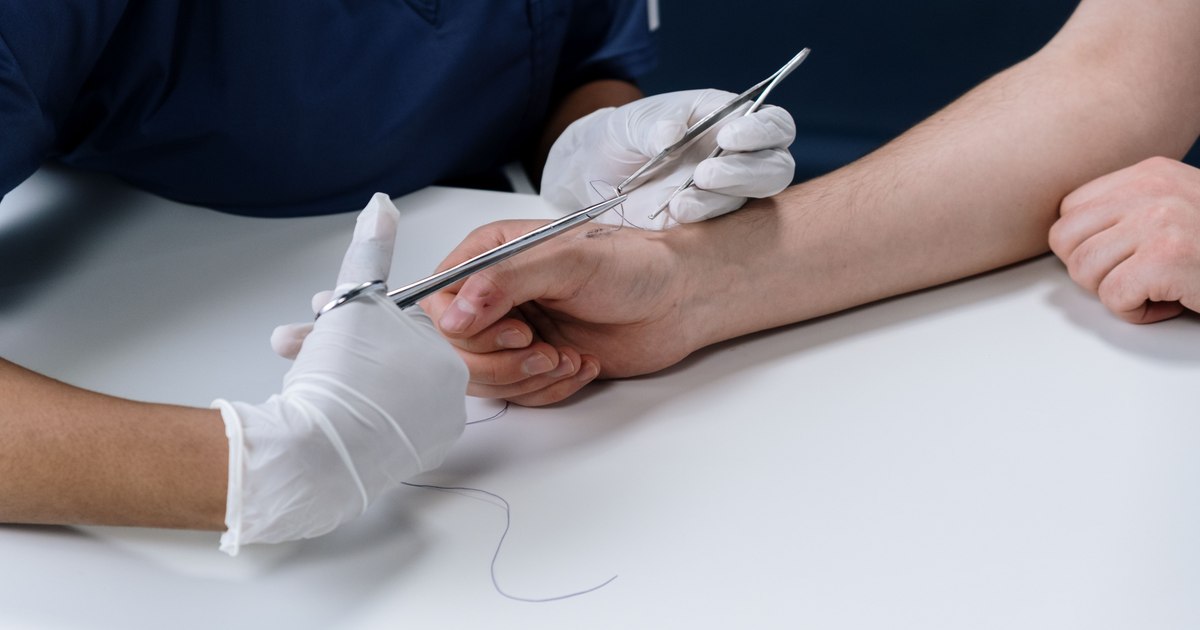
An episiotomy is a surgical incision made in the perineum, the area between the vagina and the anus, during vaginal delivery when there is a medical reason for it. It isn't done routinely for every delivery. When it is done, the repair afterward involves more layers than most people expect.
What actually gets cut and repaired
The repair can involve up to three tissue layers, depending on the depth and extent of the incision:
- The mucosal layer — the vaginal lining
- The muscular layer — the underlying perineal muscles
- The skin layer — the outer covering
Not every episiotomy involves all three layers to the same degree; how deep the incision goes determines which layers actually need repair.
Mediolateral vs midline: the two main cut directions
Episiotomies are generally made in one of two directions, and your obstetrician chooses between them based on your anatomy and the situation during delivery:
- Mediolateral — the incision angles outward and downward from the midline, away from the anus. This angled direction is generally considered to carry a lower risk of the cut extending into the anal sphincter if a tear progresses further than planned.
- Midline — the incision runs straight down from the vaginal opening toward the anus. This direction can be easier to repair and tends to heal with less discomfort, but it sits closer to the anal sphincter, which is why it's generally considered to carry a somewhat higher risk of extending into it if the tear goes further than intended.
Which direction is used depends on clinical judgement in the moment — your anatomy, how the delivery is progressing, and your obstetrician's assessment of risk versus healing. Neither direction is used routinely for every episiotomy; the choice is made case by case, not as a fixed default.
Why there's no fixed number of stitches
An episiotomy repair has no fixed stitch count. It depends on the depth and extent of the cut. Your doctor decides the type of stitch material, the technique, and the number of stitches for your case. Comparing your stitch count with someone else's doesn't help, because two episiotomies of different depth and extent are simply different repairs.
The number of stitches reflects your specific incision, not a standard every delivery is measured against.
When an episiotomy is actually done
An episiotomy is used when there is a medical reason, not as a routine step in every vaginal delivery. Your obstetrician makes this call during labour based on factors like how the delivery is progressing and the baby's position, not decided in advance. If you want to know why one was or wasn't done in your case, ask the doctor who delivered your baby, since it depends on the details of your labour.
Frequently asked
Does every vaginal delivery involve an episiotomy?
No. It's done only when there is a medical reason during labour, not as a routine part of every vaginal birth. Whether one is needed is assessed in the moment based on how your specific delivery is progressing.
How long does episiotomy healing typically take?
Healing timelines vary with the depth of the repair and individual recovery, so there isn't one number that applies to everyone. If you have questions about healing, scarring, or recovery specific to your repair, raise them directly with your obstetrician rather than comparing to someone else's experience.
Is it normal for healing to feel different than a friend's or family member's episiotomy?
Yes, this is expected rather than unusual. Every delivery and every repair is individual, since the depth and extent of the incision and the tissue layers involved differ from case to case. If anything about your healing worries you, talk to your doctor rather than comparing it with someone else's recovery.
Does it matter whether my cut was mediolateral or midline?
It can be worth knowing, mainly because it explains differences in healing and risk if you're comparing notes with someone else. A mediolateral cut angles away from the anus and is generally considered lower-risk for extending into the anal sphincter, while a midline cut runs more directly toward it and can be easier to repair but carries a somewhat higher extension risk if a tear progresses further than planned. Either way, your obstetrician chose the direction based on your specific delivery, not at random.