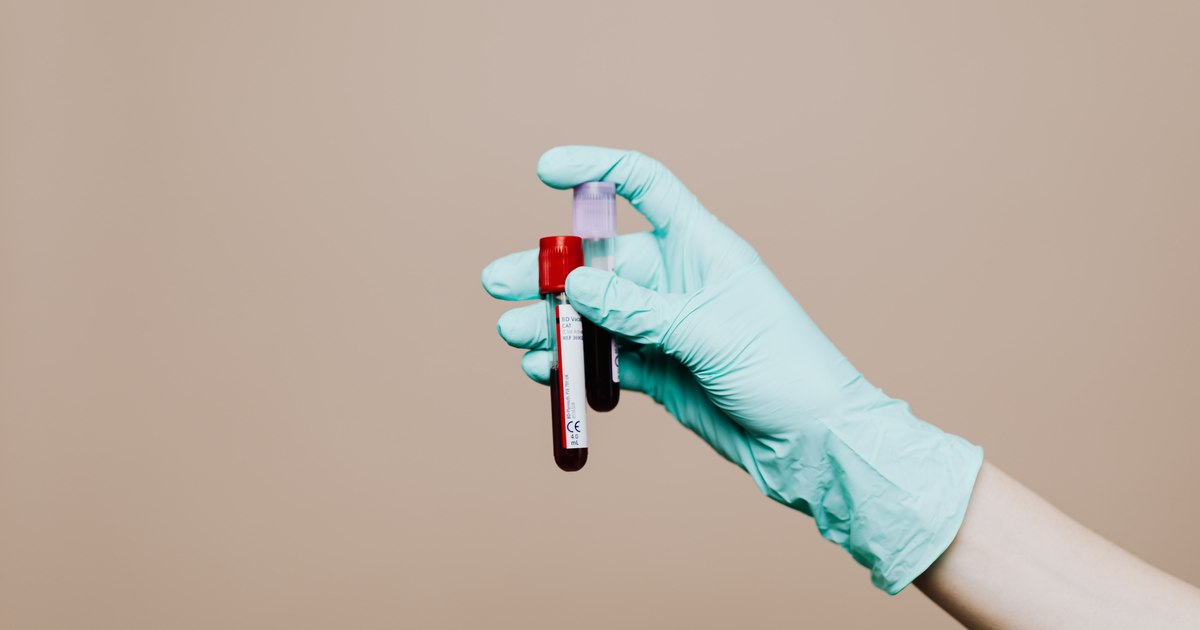
By day 10 after your transfer, if implantation has happened, hCG is already in your bloodstream and rising. What it is not yet doing, reliably, is showing up on a home urine test. This is the window where testing tells you the least and costs you the most — and it is also the shortest part of the wait.
By day 10 the question has changed
For the first week, the honest answer to "has it worked?" was that nothing had happened yet — the embryo was hatching, then attaching. In the first three days there was genuinely nothing to detect. By days 10 to 14, that is no longer true. If a day-5 blastocyst implanted around day 5 or 6, the cells that will become the placenta have been producing hCG for several days.
So the biology has moved on. What has not moved on is your ability to read it from home. The gap between "hCG exists in my body" and "hCG is high enough for this particular test strip to show a clear line" is exactly the gap these four days sit inside.
Why home tests are least reliable in precisely this window
Three things are happening at once, and they pull in opposite directions:
- hCG is rising, but from a very low starting point. In early pregnancy the level roughly doubles every two to three days. A level that is genuinely rising well can still be below a home kit's detection threshold on day 10 and clearly above it on day 14.
- The trigger injection may not have fully cleared. If your cycle used an hCG-based trigger shot, that same hormone can linger and produce a faint positive that reflects the injection, not a pregnancy. This is the classic false positive of this window.
- Kits differ in sensitivity, and urine concentration varies through the day. The same person can get a faint line in the morning and nothing that evening, with no change in what is actually happening inside.
A faint line on day 11 is therefore compatible with a healthy pregnancy, with a chemical pregnancy that will not continue, and with leftover trigger hormone. It cannot distinguish between them. Neither can a negative on day 12.
In days 10 to 14, a home test result is not early information. It is the same information you will get on test day, with noise added.
What you might notice, and what it still doesn't mean
The symptoms of this specific window — light pink or brown spotting, breast tenderness, needing the washroom more often, fatigue that arrives without warning — are the ones most often read as confirmation. They are also textbook progesterone effects, and you are still on progesterone support.
Nothing has changed about the core rule from earlier in the wait: symptoms in either direction carry no verdict. The day-by-day guide sets out why, and the fuller discussion of positive signs covers the ones women notice most, including why feeling nothing at all is equally normal.
The one thing worth tracking in these four days is not symptoms but medication. Progesterone and any other support your clinic prescribed matter right through to the test and beyond — not up to it.
Beta hCG day: what actually happens
The test itself is undramatic. It is a routine blood draw, usually in the morning, with no fasting required unless your clinic tells you otherwise. Results typically come the same day.
What the blood test gives you that a home kit cannot is a number, not a yes or no. That number is why your clinic will often repeat the test about 48 hours later: a single value at day 14 says less than the change between two values. A level that is rising as expected is the reassuring finding — not any particular first number in isolation.
Practical things worth knowing before the day:
- Take all your medicines as normal that morning, including progesterone, unless specifically instructed otherwise
- Ask your clinic when and how you will get the result, so you are not refreshing a phone all afternoon guessing
- Ask whether a repeat test is already planned, so a second blood draw doesn't arrive as alarming news
- If the result is positive, an early scan follows a couple of weeks later to confirm the pregnancy's location and heartbeat — the blood test is a beginning, not the finish line
When to call before your test date
Most of this window is a waiting exercise, not a medical one. Contact your clinic without waiting for the test date if you have:
- Bleeding as heavy as a period, or bleeding with clots
- Severe pain, or pain clearly on one side rather than mild central cramping
- Fever
- Bloating that is rapidly worsening, noticeable weight gain over a day or two, breathlessness, or passing much less urine than usual — these can signal ovarian hyperstimulation and need same-day review
- Vomiting that stops you keeping your medicines down
Light spotting on its own, in this window, is common and usually harmless.
Getting through four days
The final stretch is often harder than the first week, because now there genuinely is something to know and you still cannot know it. A few things that help, in practice:
- Decide in advance whether you will test at home, and stick to that decision. Deciding fresh each morning is what turns four days into forty tests.
- Put the test date in a calendar and treat the days before it as ordinary days. Not because the wait isn't significant, but because there is no action available to you inside it.
- Tell one person, not everyone. Managing other people's hope alongside your own is extra weight you don't need this week.
- Plan something for test day itself — company, or work, or an occupied afternoon. Either result lands better when the day has a shape.
If the result is not what you hoped for, the two-week wait guide covers what a review consultation looks at next, and why one unsuccessful transfer does not define the ones after it.
Frequently asked
I got a faint positive on day 11. Is that good news?
It is genuinely uncertain news, which is uncomfortable but accurate. A faint line at this stage can reflect a rising pregnancy hormone, a pregnancy that will not continue, or leftover hormone from an hCG trigger injection. Only the blood test — and usually a second one 48 hours later — can tell those apart. Try not to build or abandon hope on a faint line.
I tested negative on day 12. Is it over?
Not necessarily. hCG can still be below a home kit's detection level on day 12 in a cycle that goes on to test clearly positive on day 14, particularly with a day-3 transfer, which runs roughly two days behind a blastocyst transfer throughout. A negative home test before your clinic's test date is not a result.
Should I stop progesterone if a home test is negative?
No. Never stop prescribed support based on a home test. Progesterone continues until your clinic tells you to stop, which follows the blood test — not a strip.
Why 14 days and not 10?
Because at day 10 a meaningful proportion of successful cycles have hCG levels too low to measure confidently, and any hCG trigger injection may not have fully cleared. Day 14 is chosen so that a positive is trustworthy and a negative is close to final — testing earlier trades reliability for four days.
Does spotting on day 12 mean implantation failed?
Usually not. Light pink or brown spotting is common in this window and has several harmless explanations, including the progesterone support and the cervix being handled at transfer. Bleeding as heavy as a period warrants a call to your clinic, but even that is not automatically the end of a cycle.