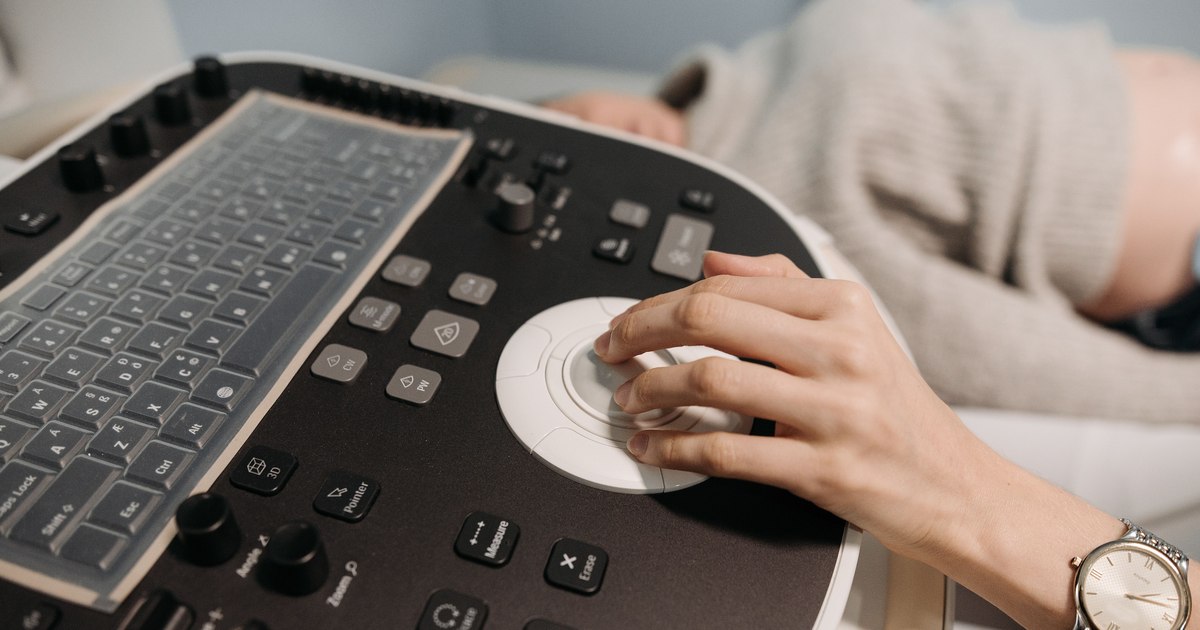
For most women under 40 who find a new breast or armpit lump, an ultrasound is the first imaging test — not a mammogram. Younger breast tissue is denser, and ultrasound reads dense tissue more clearly than mammography does. Age, not fear, is what should decide which test you book first.
Why ultrasound usually comes first under 40
Breast tissue gets less dense with age, and mammography works better on less dense tissue. In women under 40, dense tissue can make a mammogram harder to read accurately, so ultrasound — which looks directly at the lump itself rather than imaging the whole breast on an X-ray — is generally the more informative first test. It's also useful for telling a simple fluid-filled cyst apart from a solid lump immediately, which changes what happens next.
When a mammogram is added
- Age 40 and above, where breast tissue is typically less dense and mammography becomes a more reliable primary or complementary test
- When an ultrasound finding needs a second look — certain solid lumps or patterns on ultrasound are followed up with a mammogram to get a fuller picture
- As part of a two-test combination when the clinical picture isn't fully clear from ultrasound alone, since the two tests pick up somewhat different things and are often used together rather than as strict alternatives
Your doctor decides the sequence based on your age, the lump's feel on examination, and what the first test shows — there isn't one single rule that applies to everyone.
How an armpit lump is assessed
A lump in the armpit is evaluated with the same imaging logic as a breast lump — ultrasound first in younger women, with a mammogram added where relevant — because armpit lumps are frequently related to lymph nodes that drain the breast, and the two are often assessed together rather than as separate problems. An armpit lump found alongside a breast lump, or alongside one-sided breast pain, should always be mentioned to your doctor as part of the same evaluation, not treated as a separate, unrelated finding.
What makes a lump more urgent
Most breast and armpit lumps turn out to be benign — a cyst, a fibroadenoma, or a reactive lymph node from a minor infection nearby. But get it assessed promptly, rather than waiting, when a lump:
- Feels hard, irregular in shape, or fixed in place rather than mobile under the skin
- Is new and growing, rather than stable over time
- Comes with skin changes over it — dimpling, puckering, or redness
- Comes with nipple discharge, especially if blood-stained or from one side only
- Is accompanied by one-sided breast pain that doesn't follow your cycle
None of these findings alone confirms anything serious — they're simply the features that move a lump from "reasonable to watch and reassess" to "get imaged and examined now."
Finding a lump doesn't mean the worst outcome — most aren't cancer. But any new lump deserves a proper look with the right first test, not a wait-and-see approach based on guesswork about what it might be.
What happens after imaging
If ultrasound (with or without a mammogram) shows a finding that looks benign, the usual next step is a follow-up scan at an interval your doctor sets, similar to how a BI-RADS 3 finding or fibroadenoma is managed. If imaging shows a more suspicious pattern, a biopsy is the next step to get a definite answer — imaging alone can suggest a likelihood, but a biopsy is what actually confirms what a lump is.
Frequently asked
I'm under 40 — should I ask specifically for an ultrasound, not a mammogram?
Yes, it's reasonable to raise this with your doctor. Ultrasound is typically the more informative first test for younger, denser breast tissue, so if a mammogram is offered first without discussion of age or tissue density, it's a fair question to ask.
Does a lump in the armpit always mean something is wrong with the breast?
No. Armpit lumps are frequently reactive lymph nodes responding to a minor infection or irritation nearby and resolve on their own. They're evaluated alongside the breast specifically because lymph nodes there do drain the breast — not because an armpit lump automatically implies a breast problem.
Is one-sided breast pain without a lump worth getting checked?
Yes, particularly if it's persistent and doesn't follow your menstrual cycle. Pain without a palpable lump is usually benign, but it's reasonable to have it evaluated rather than assuming it will resolve, especially if it's new and one-sided.
How soon should I get a new lump checked?
Promptly — within days to a couple of weeks — rather than waiting months to see if it changes on its own. Most lumps turn out to be benign, but getting the right first imaging test early is what actually gives you and your doctor a clear answer, instead of extended uncertainty.