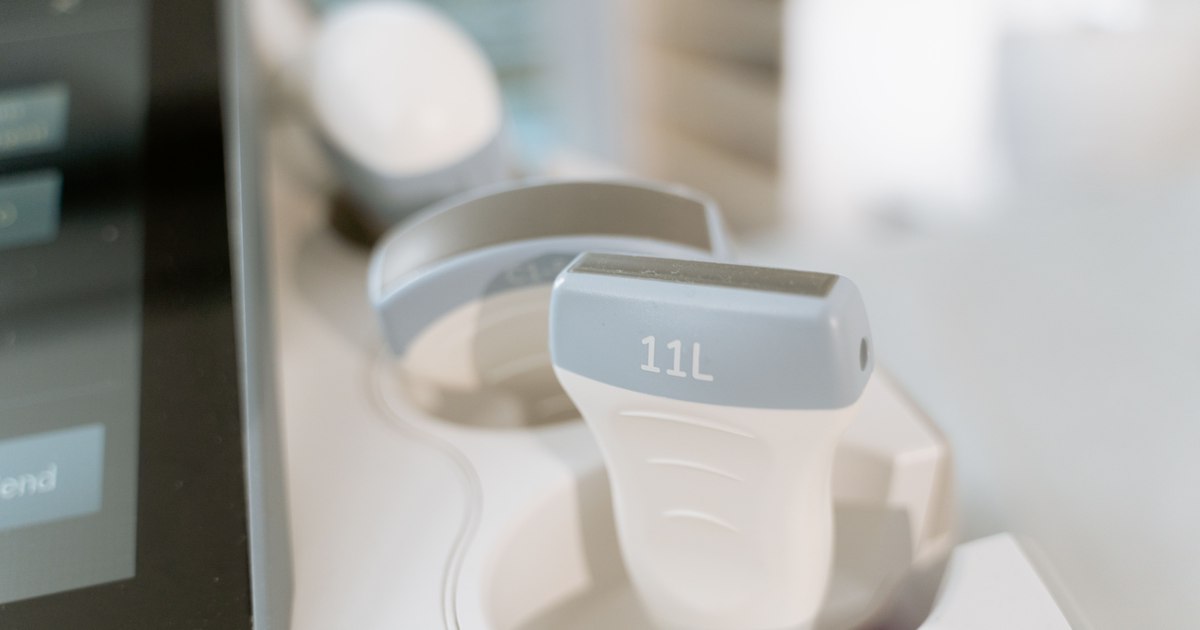
If your doctor has asked for a transvaginal scan (TVS) in early pregnancy, it's normal to feel alarmed — especially if you've heard it can cause bleeding or harm the baby. It can't. A transvaginal scan uses a slim, covered probe placed gently in the vagina, and it doesn't cause bleeding, pain, or miscarriage. It's recommended in early pregnancy simply because it gives a far clearer picture than a scan done over the abdomen.
Why your doctor wants a transvaginal scan, not just an abdominal one
In very early pregnancy, the uterus and the developing baby are still tiny, and a full bladder — needed to "push" the uterus into view for an abdominal scan — often isn't enough to get a clear picture through the abdominal wall. A transvaginal probe sits much closer to the uterus, so it can show the pregnancy's exact location, an early heartbeat, and the size of the sac or embryo well before an abdominal scan reliably could. This is exactly why it's the standard, preferred scan in the first several weeks — not a sign that something is wrong with your pregnancy.
What actually happens during the scan
- The probe is always covered with a disposable protective sheath, like a glove, for every patient.
- It's inserted gently, only a short distance into the vagina — not deep, and not near the uterus itself.
- Most women feel mild pressure at most, similar to an internal exam. It should not be painful.
- The scan itself typically takes a few minutes.
- You can empty your bladder beforehand — unlike an abdominal scan, a TVS doesn't need a full one.
Why it doesn't cause bleeding or miscarriage
The probe only reaches the vaginal canal — it never touches the uterus, the amniotic sac, or the baby. There is no contact with the pregnancy itself, so there is no mechanism by which the scan could dislodge or disturb it. Any bleeding or miscarriage that happens to occur around the time of a scan is coincidental, not caused by the scan — the same way a headache on the day of a blood test isn't caused by the blood test. Transvaginal ultrasound is considered safe at any stage of pregnancy when it's clinically indicated.
A transvaginal scan doesn't touch your baby. It only gives your doctor a clearer window to see what's already there.
Where else a transvaginal scan is used
Beyond confirming and dating a pregnancy, a TVS is also a routine tool in fertility workups — checking the ovaries for follicles, the uterus for its lining and shape, and looking for anything that might affect conception. If you've had one done as part of fertility treatment, it's the same safe technique, just used for a different purpose. For the fuller schedule of scans across pregnancy, see how many ultrasound scans you need in pregnancy.
Frequently asked
Can a transvaginal scan cause a miscarriage?
No. The probe doesn't come into contact with the uterus or the pregnancy — it only images from the vaginal canal. There's no way for the scan itself to cause bleeding or pregnancy loss.
Is a transvaginal scan painful?
It shouldn't be. Most women feel mild pressure, similar to an internal exam, not pain. Tell your doctor if you feel actual pain — sometimes small adjustments make it more comfortable.
Why can't they just do an abdominal scan instead?
In very early pregnancy, the uterus and baby are too small to see clearly through the abdominal wall. A transvaginal probe sits much closer, giving a sharper, earlier, and more reliable picture — including the heartbeat, before an abdominal scan reliably could.
Do I need a full bladder for a transvaginal scan?
No — that's only needed for an abdominal scan. For a transvaginal scan, an empty bladder is usually more comfortable.
Is it safe to have a transvaginal scan in every trimester?
It's most commonly used in the first trimester, when it gives the clearest early picture, but it's considered safe whenever it's clinically indicated at any stage.